
Psychoneuroimmunology 101 with Dr Olivia Lesslar: Why Your Body Keeps Score
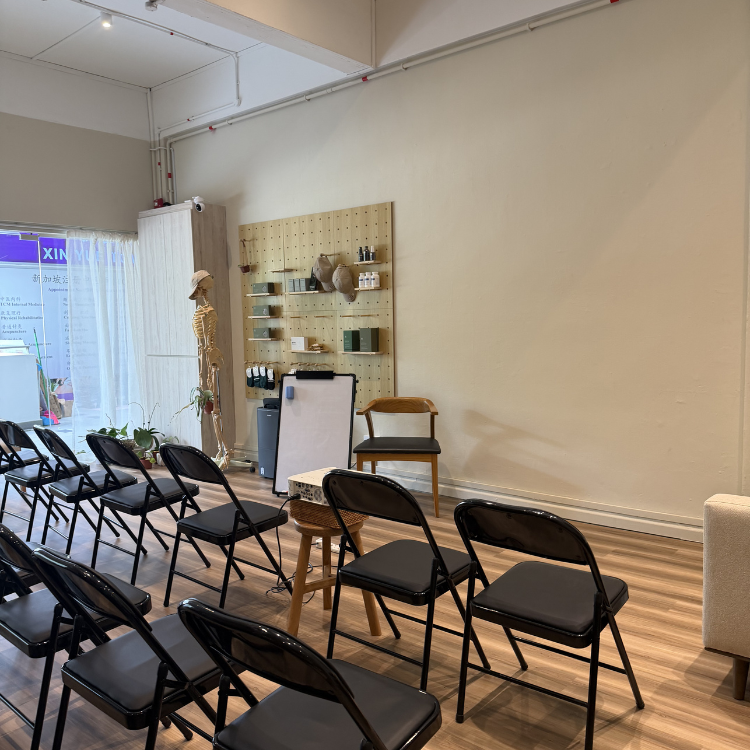
Last month, we hosted Dr. Olivia Lesslar for a four-hour deep dive into something we think about every single day at Soma Haus: why the body does what it does, and what it's actually trying to tell us.
Dr. Olivia is a functional medicine practitioner working at the intersection of evolutionary biology, psychoneuroimmunology, and what she calls the "network of threat detection", the layered system your body uses to decide, in every moment, whether you are safe enough to heal.
What Is Psychoneuroimmunology — And Why Does It Matter?
Psychoneuroimmunology (PNI) is the study of how the mind, the nervous system, and the immune system communicate with each other in real time.
For a long time, these were treated as separate systems in medicine. The psychiatrist looked after the mind, the neurologist looked after the brain, and the immunologist looked after disease. PNI challenges that separation at a fundamental level: It tells us that what you think, feel, remember, and believe directly and measurably affects your immune function, inflammatory response, hormone levels, and capacity to heal.
A stress hormone doesn't stay in the brain. It travels and reaches the gut, the skin, the reproductive system; it literally speaks to your immune cells that have no idea whether the threat is a predator, a difficult conversation, or a childhood memory resurfacing at 2am.
Why Your Symptoms Make Sense: The Science of "Locally Rational" Responses
One of the biggest takeaways from the 4 hours with Dr. Olivia was this: everything the body does makes sense from where it's standing.
Reflux. Skin flares. Recurring infections. Anxiety. Exhaustion that no amount of sleep fixes. These aren't random malfunctions. They're a system making the best possible decision with the information it has. The body is not broken. In fact, it is, in its own logic, trying to keep you alive. This matters because the moment we stop fighting our symptoms and start getting curious about them, something shifts.
The body has what Dr. Olivia calls "guardian sites" - areas with direct access to the outside world: the gut, the skin, the lungs, the mouth, the urinary and reproductive systems. These sites are densely populated with mast cells, a type of immune cell that acts as a first responder. When a mast cell perceives a threat, be it a pathogen, a toxin, a chemical signal, even a stress hormone, it degranulates, releasing a cascade of signalling molecules that trigger inflammation, pain, or hypersensitivity.
What’s critical here is that mast cells don't distinguish between a genuine biological threat and a perceived one. High cortisol and adrenaline (our stress hormones) read to a mast cell the same way a parasite or bacteria would. So the stomach produces more acid. The skin flares. The gut tightens. Not because something is wrong with these systems, but because they are doing exactly what they were designed to do: mount a defence i.e. “locally rational”.
Our Biggest Challenge with Modern Medicine
The problem is that we now live in what Dr. Olivia described as a "soup of modernity." Artificial light. Ultra-processed food. PFAS. Electromagnetic fields. Social isolation. Chronic overwork. Ancient systems haven't caught up, so they fire at everything. So in other words, chronic inflammation isn't a disease. It's a rational short-term response to perceived threat that has simply never been allowed to switch off.
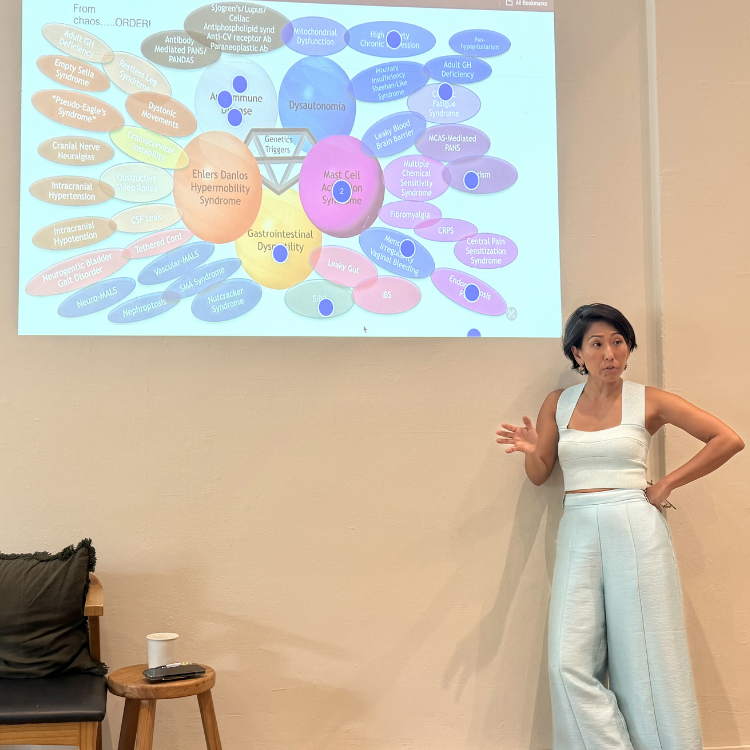
One of the biggest challenges we see clinically is that many conditions emerging from a chronically activated nervous system don't yet have a clear home in conventional medicine. Long COVID, MCAS, dysautonomia, fibromyalgia — these don't show up cleanly on standard tests, and they rarely fit a single diagnostic box. More often than not, a lot of our patients tell us just how easily they get dismissed, minimised, or treated in isolation, one symptom at a time, when the system driving them is whole and interconnected. This is certainly not a failure of medicine but is the leading edge of what medicine is still learning.
Understanding this isn't just academic. It changes what we ask of our patients, what we ask of ourselves as practitioners, and what we believe is actually possible in the room.
The Substrate and the Reader: Why Two People With the Same Diagnosis Heal Differently
Dr Olivia used the framwork: the Substrate (the food, the environment, the people around you) and the Reader (your nervous system's interpretation of those inputs, shaped by your history).
How to understand is when we look at two people who can eat the same meal, sleep in the same room, and receive the same diagnosis, yet their bodies will respond completely differently. This is because the Reader isn't neutral. It carries your Adverse Childhood Experiences, your previous illnesses, your grief, your sense of safety or its absence.
This is why Dr. Olivia talks about "hysteresis" — the path you took to get sick is not the path you'll take to get well. You can't simply retrace your steps. Healing asks for something different, and while we can't always control the Substrates of modern life, we can work on the Reader. This can be through safety practices, gratitude, somatic work, bodywork, therapy and relational healing, what is often termed as "soft" interventions. They are direct inputs into how the body allocates its resources.
At the end of the day, we know that our body keeps score. Every unresolved threat, every period of chronic stress, every moment the nervous system concluded it wasn't safe- it's all still there, shaping how the Reader interprets today. But scores can change. The nervous system is not a verdict and at Soma Haus, we believe that given the right conditions, the right relationships, and enough felt safety, it can be rewritten. That possibility is what sits at the heart of everything we do.
If you're navigating chronic illness, chronic pain, or simply a body that feels like it's working against you — we want you to know that what you're experiencing has logic, and it most certainly has the possibility of change.
