
BEYOND SAFETY
Specialised Training in Trauma-Awareness & Decolonisation in Movement & Therapy

Why Trauma-Awareness Matters
Trauma-informed principles were first introduced in healthcare settings, specifically around informed consent and body respect, and it is only in recent years that this paradigm has started trickling down to the world of wellness, fitness and movement professionals. This is to be celebrated.
As a society, we cannot ignore the impact of trauma on individuals and groups; for somatic and movement professionals, it is even more critical for us to be up-to-date with the latest trauma research and how it reframes our teaching approaches.
Beyond Clinical Settings
A trauma-sensitive and/or trauma-informed approach is often found in more clinical settings, where the probability of increasingly complex forms of trauma may be higher than in other spaces. This is not the case for many of our general fitness and movement classes.
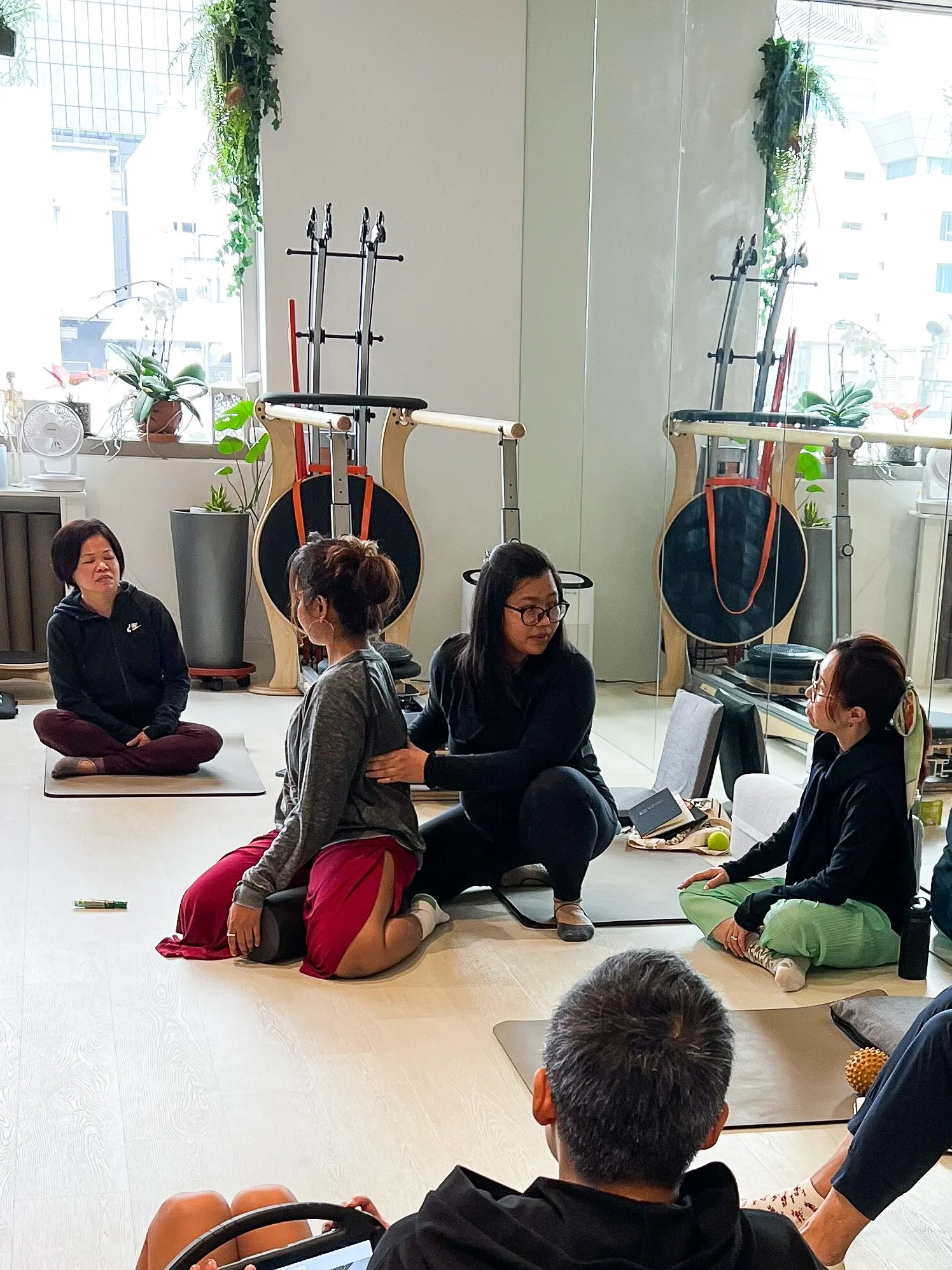
Our trauma-awareness approach considers the context in which most movement and fitness professionals find ourselves in: non-clinical, wellness/fitness-focused spaces, with medium to larger-sized group and/or individual settings.
Decolonisation Framework
Additionally, we need to consider contextualising trauma-awareness within the wider discourse of decolonisation. Decolonisation serves as a framework for us to critically examine the colonialist nature of numerous trauma theories today, and invites us to consider a country's culture, as an important lens from which to view and practise our teaching skills.
The majority of research supporting trauma-sensitive modalities centres the Western experience (e.g. veterans returning from the Vietnam War), and much of the scholarship continues to be found in the USA, Europe and Australia. Given the absence of coverage on Asian and Eastern cultures, we have found ourselves having to reconsider some of these approaches, in order to be more nuanced and accessible. We believe that in doing so, we can better foreground trauma-awareness in fitness and movement spaces, in ways that also honour local and cultural needs.
What We Offer
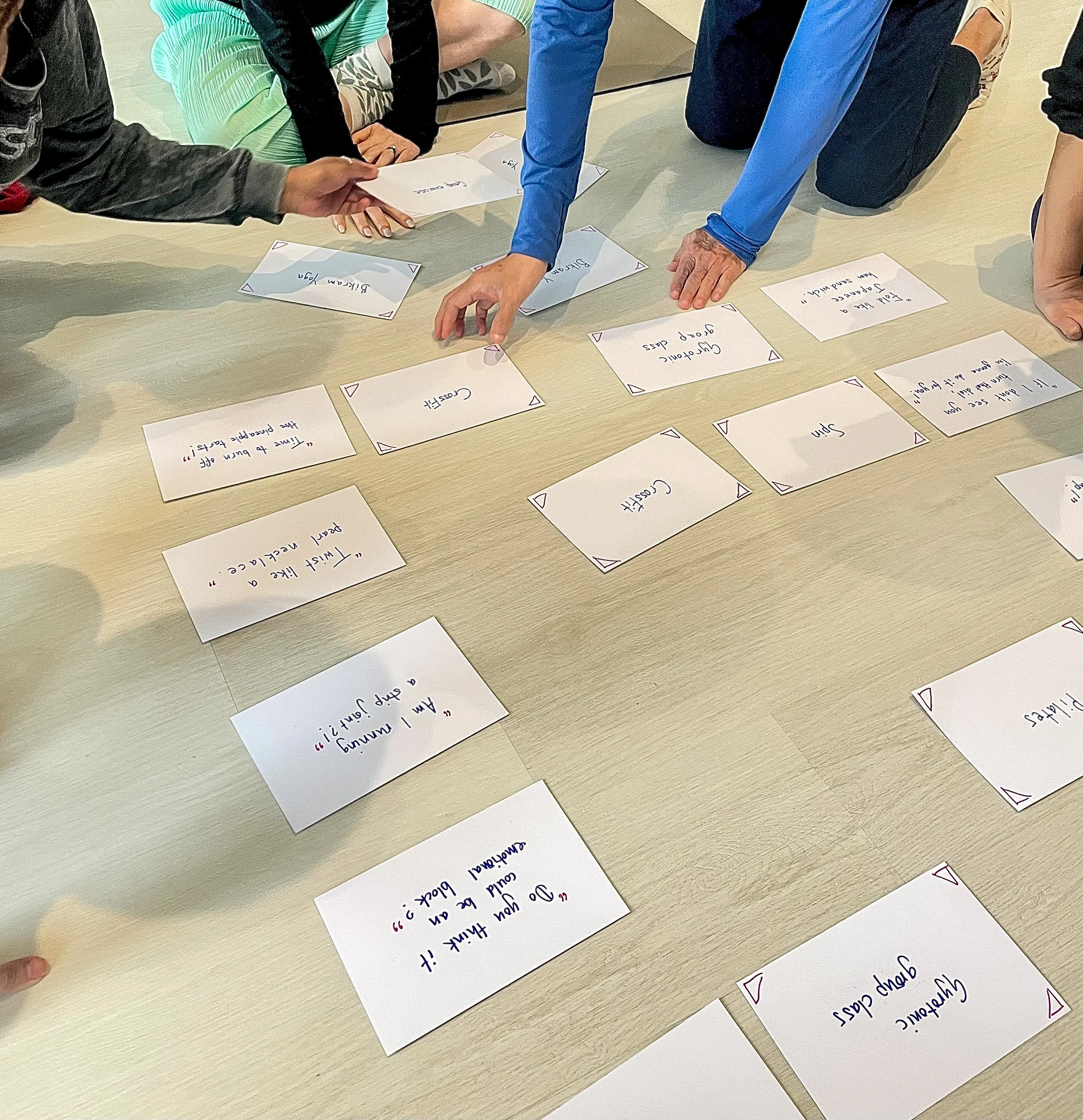
This Yoga Alliance-accredited training is fully in-person with some self-study. We will prioritise in-person interactions for hands-on practicums, peer teaching and deliberative discussions. 100% attendance and completion of modules is required for graduation.
The training gives you the foundation to:
Create Braver Spaces – foster environments rooted in respect, choice, and body autonomy.
Integrate Trauma-Awareness – apply practical principles that enhance everyday teaching in both group and individual settings.
Adapt with Cultural Sensitivity – move beyond Global North-centric models by contextualising trauma theory for local and diverse communities.
Build Confidence & Care – develop skills to guide participants in ways that are supportive, inclusive, and inquiry-based.
Training Dates
8 & 9 November (Saturday & Sunday)
8 am - 6 pm (Includes an hour break for lunch)


Lead Trainers
-
RYT200,RPYT, CD/PCD(DONA),GGS CPPC,SpBCPE,BRM Pro
Dewi Chen (she/her) is a certified yoga teacher, teacher trainer, manual therapist, and doula. She was the founder of Terra Luna Yoga, Singapore's first trauma-aware yoga and movement studio. Her calling in to the world of trauma-informed practices began as a personal journey at first, having been subject to abusive teachings and sexual assault within the yoga community. She then undertook more professional trainings in the field, from Trauma-Sensitive Yoga, Clinical Applications of Polyvagal Theory, Perinatal Mental Health, and several other related workshops.
Her yoga certifications are in Hatha Yoga, Yin Yoga, Pre/Post-natal Yoga, Restorative Yoga, Well-Woman Yoga & Therapy, Yoga Nidra, and Kids & Family Yoga. Outside of yoga, Dewi is also trained as a Barefoot Training Specialist® and BARE® workout instructor.
Drawing inspiration from her own experiences and her love for applied physiology, Dewi is a trained manual therapist and bodyworker. Seeing the body through a therapeutic lens not only aligned with her philosophy on trauma-awareness, it provided the necessary tools on how best to offer hands-on assists in movement classes
-
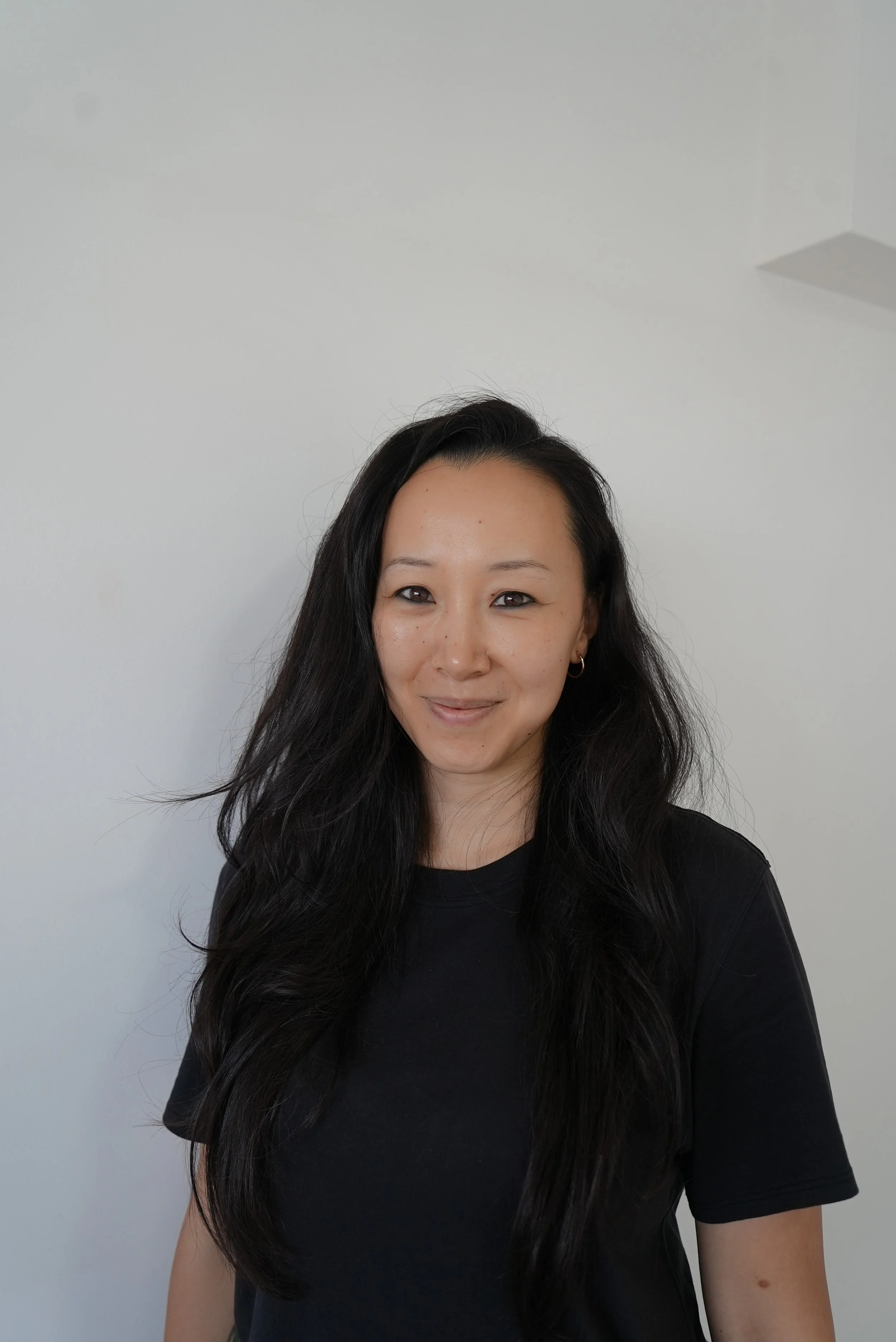
E-RYT200, RPYT, FRCms, Advanced Relax and Renew® teacher, Yoga for All, Trigger Point Therapy®
Jennifer Tan (she/her) has been in education of various kinds for the past 19 years, from more academic settings, to CrossFit coaching and Yoga teacher training. Specific to yoga, she has taught various styles, trained in specialised areas such as applying accessibility and trauma awareness to the teaching sphere, and eventually placed much of this learning in her teaching and training of Restorative Yoga; this has nourished Jen’s eight-year-long (and counting) relationship with her teacher, Judith Hanson Lasater, who she assists both in-person and online.
Complementary to her teaching years lies her experience in curriculum development, which has recently culminated in the co-writing/leading of a 200h Yoga Teacher Training, and the writing/leading of a 50h Restorative Yoga Teacher Training. Thanks to her own journey of unlearning, these trainings increasingly seek to bring to the forefront topics such as intersectionality and the importance of decolonising our movement practices.
All of Jen’s classes are invitational and curiosity-driven, with the hope of finding ways to move and rest our bodies with confidence and compassion.
THE SYLLABUS
1. Understanding Trauma
Applied Polyvagal Theory in movement and therapy spaces
Key elements of Trauma-Awareness and how it is distinct
Group safety in movement and therapeutic settings
2. Power & Abuse
Why do we need to talk about power?
Understanding power dynamics in the teaching/learning/therapy space
Words matter: the importance of language and how we use it
Case studies
Red flags: cult(-like) dynamics and how to notice/move away from them
4. Teaching Methodology & Practicum
Cueing, prompting and speaking
Design and sequencing
Hands-on work
3. Decolonisation in Practice
TA & recognition of identities
Cultural appropriation & decolonisation in movement and wellness spaces
Intersectionality & its significance within the wellness and movement community
Reflective practices
Tuition Fee & Terms
-
The regular fees are $1,000 SGD.
100% payment must be made to guarantee enrolment. Bank transfer is preferred. Kindly use the QR code provided below.
Credit Card Payments will incur a 3% admin fee. For credit card payments, click here.
-
Early bird fee is $700 SGD valid until 18th October.
100% payment must be made to guarantee enrolment. Bank transfer is preferred. Kindly use the QR code provided below.
Credit Card Payments will incur a 3% admin fee. For credit card payments, click here.
-
We believe finances should not be a barrier to learning. A limited number of sliding scale spots and partial scholarships are available for those with financial need. Kindly write in to let us know.
-
To support accessibility, we also offer a split payment option:
2 Instalments: 50% upon registration to confirm your spot, 50% a week before training start date.
3 Instalments: 1/3 upon registration to confirm your spot, 1/3 one month later, 1/3 a week before training start date.
Please note that Instalment plans paid on a credit card will include a small admin fee approximately 3% per transaction.
-
The programme will not give any refunds or credits after enrolment is confirmed. As training spaces are limited in number, we ask that you ensure your availability to attend before committing to the course financially.
The programme reserves the right to cancel any training before it begins. In that case, any payments applicants have made will be refunded in full.
Payment Modes
Please note that this link takes you to a credit card payment with a 3% surcharge. If you prefer paynow, kindly use the QR code or UEN for payment.
Credit Card
Choose to scan our QR to paynow, kindly add “NAME_BEYOND” to the reference.
Send us us a screenshot via whatsapp (click ‘book’)
Paynow (QR Code)

FAQs
-
This course is for anyone who serves in the field of movement education, therapy, and healthcare, as well as curious individuals interested in learning how to apply a trauma-aware and decolonised lens to their own journeys.
-
70% of the course will be theory, discussion and reflective exercises, with 30% dedicated to hands-on work and physical movement.
-
There will be a documentary film that we encourage all participants to watch before the course commences, and this is entirely optional.
-
There are no assignments to be handed in to complete the course. We will offer a detailed reading list and extra-curricular resources to help support your continued learning after the course.
-
Yes, definitely! We find that even in the field of mental healthcare and trauma-informed yoga teacher trainings, there can be gaps in the understanding of how we can be more trauma-aware, especially when it comes to verbal and body language, cultural sensitivities, LGBTQIA+ awareness, etc.
In many trauma trainings, there can be a lot of emphasis on the theory of trauma, and when it comes to applications, we find that a nuanced and contextualised approach that considers identities, intersections and collective care, is not often spoken to.
Additionally, decolonisation as a framework for mental healthcare practitioners is rarely included in many trainings around psychotherapy, and we hope that this CET is a stepping stone towards having more conversations that centre this.
-
We will speak to this directly, as it is so often the case that we find the capacity to apply trauma-aware techniques, but the discomfort of decolonising one’s practice can serve as a deterrent. This training is not about leaving the two days and being able to say we are trauma-aware and decolonised in what we do, but rather, opens the gateway for us to explore how we can make changes and adjustments to our work, in order to better serve and honour those for whom we hold space. It is not always the easiest of journeys, but it is certainly a fruitful one.
-
We currently do not have scholarship options for short courses; however, we do have an instalment for those of us who need to have deferred payments. Please reach out to Soma Haus directly.
-
Yes, we can arrange for a complimentary discovery call with the host & facilitators of the course. Please help us complete the form below.
Not sure if this training is right for you?
We offer a free 15-minute discovery call where you can:
Ask questions about the training content and approach.
Learn how trauma-awareness can support your work.
Explore whether this program aligns with your professional journey.