
With deep thanks to Falguni Mather, who generously let us share her words. Full article here.
Tapping and EFT as Somatic Therapy
In recent years, the practice of Tapping has gained significant attention across various social media platforms and self-help circles as a simple and accessible technique for managing stress, anxiety, and other emotional challenges. Often shown in short videos and tutorials, Tapping has become synonymous with self-care and personal growth.
What is Emotional Freedom Techniques or EFT?
Emotional Freedom Techniques (EFT) is also known as ‘tapping’ because we tap on and stimulate various pressure points on the face, upper body, and hands as we verbalise our thoughts and feelings. EFT does involve tapping, but not all Tapping is EFT. While Tapping is a valuable tool for those seeking relief and relaxation, EFT encompasses a broader spectrum of therapeutic techniques that are generally unfamiliar to casual users.
What is Tapping?
Tapping, by itself, is a technique (singular) that involves gently stimulating acupressure points on the body with the fingertips while repeating specific phrases. Simple tapping can be an effective tool (again, singular) for reducing stress and down-regulating amygdala activation. It helps to access calm and clarity in the moment. As a self-care tool, clients can even use it by themselves between sessions with their therapist or practitioner.
EFT stands for Emotional Freedom Techniques, plural. That’s because EFT comprises a comprehensive set of therapeutic protocols and interventions (again, plural). It is much more than the simplified version often seen in social media videos. When used by a professionally certified and accredited practitioner, EFT can be used with a wide range of psychological challenges, including traumatic experiences, chronic pain and anxiety. In its professional application, EFT involves a structured, multifaceted approach to safely, gently, and effectively applying techniques tailored to individual needs. This helps the client safely navigate their specific concerns.
Key Differences Between EFT and Tapping
“EFT does involve tapping, but not all Tapping is EFT.” — Falguni Mather
What it is
Tapping
A single, simple self-care technique
EFT
A set of therapeutic techniques (plural), used in a structured way
Who guides it
Tapping
You, on your own, often learned from online videos and guides
EFT
A trained, accredited practitioner
How it’s structured
Tapping
A broad term for tapping on one or more points. Tapping is also used in other approaches, such as EMDR and Body Talk.
EFT
Follows a clear process: setup phrases, reminder phrases, and checking intensity throughout
The words used
Tapping
General scripts on a theme, the same for everyone
EFT
Your own words, feelings and body sensations, adjusted as the session unfolds
Affirmations
Tapping
May use positive affirmations, like “I am abundant”
EFT
Usually avoids them, and turns gently toward difficult feelings, thoughts or memories, because awareness is the first step to change
Where it looks
Tapping
How you feel right now
EFT
The past experiences that shape how you respond today
Depth of work
Tapping
Short-term relief and calm in the moment
EFT
Deeper work with issues such as anxiety, phobias, trauma and chronic pain, aiming for lasting change
Pace and safety
Tapping
Flexible and simple to use for everyday stress
EFT
Targeted techniques (such as the Movie Technique, Tearless Trauma, Chasing the Pain and the Container Technique), plus Gentle Techniques so people can work at a pace that feels manageable
Training
Tapping
None needed
EFT
Accredited training and certification (for example through EFT International), an ethics code, regular mentoring and yearly professional development
Both have their place. Tapping is a lovely way to care for yourself in the moment. EFT is there when you’d like support to go deeper.
Adapted with permission from “The Difference Between Tapping and EFT” by Falguni Mather
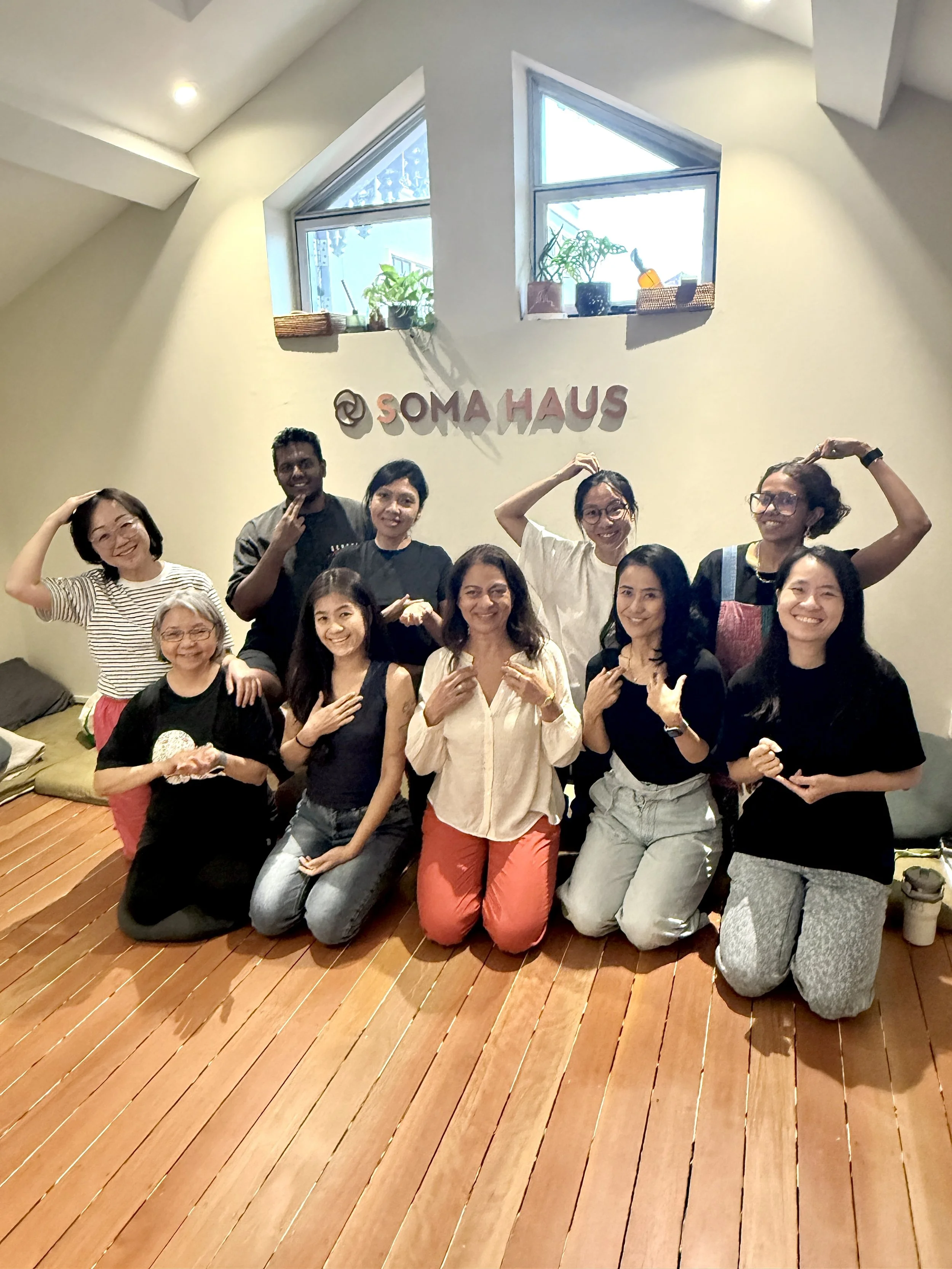
Our Recent EFT Practitioner Training in Singapore
We were so happy to welcome Falguni to our Joo Chiat clinic and studio for our recent EFT practitioner training. Eleven people joined us, and the mix in the room was something special. Some were professionals working in the mental health space, wanting to deepen how they support their clients. Others came simply for their own personal growth and healing. We have just opened our bookings for our 2027 intake. If you’ve been curious to expand your toolkit professionally or personally, we hope to see you there!
Frequently asked questions
Is tapping the same as EFT?
Not quite. EFT (Emotional Freedom Techniques) does use tapping, but tapping on its own is just one simple technique. EFT is a whole set of techniques, used in a structured way by a trained practitioner. It works with your own words, feelings and body sensations, and gently explores the experiences underneath them. As Falguni puts it, “EFT does involve tapping, but not all Tapping is EFT.”
Can I do EFT on my own?
You can absolutely use simple tapping on your own. It’s a lovely way to settle yourself in a stressful moment, and many people use it between sessions. For deeper work, especially with old memories, trauma or long-held patterns, it’s best to work with a trained EFT practitioner who can help you go at a pace that feels safe.
Is EFT suitable if I’ve experienced trauma?
EFT includes a set of Gentle Techniques designed to help people work through difficult experiences at a pace they can manage. If you’re carrying trauma, please work with a trained practitioner rather than on your own, ideally someone with experience in trauma. EFT can sit alongside counselling, psychotherapy or medical care, but it isn’t a replacement for them.
Where can I train as an EFT practitioner in Singapore?
Soma Haus hosts EFT practitioner training led by Falguni Mather, an EFT trainer and mentor, at our Joo Chiat clinic and studio. Our 2027 intake is now open. You can find the details and book on our EFT training page.
Do I need a background in mental health to join the training?
No. Our last cohort was a mix of mental health professionals and people who came for their own personal growth, and both were very welcome. If you’re unsure whether it’s right for you, just reach out and we can have a chat.
